Why We Don’t Plant Coral
A note on data, patience, and what real reef protection looks like in Pemuteran
Working in the ocean every day changes how you see it. For us at Abyss Ocean World, marine conservation was never separate from diving — the reef is our workplace, and protecting it was never optional.
That’s why one of our team’s guiding lines is simple: data is knowledge, and knowledge is power.
One of the most common questions we get from guests is whether we offer coral planting. Right now, the answer is no. Not because we think planting is wrong, and not because we don’t know how — we do, and we have planted coral in the past. It’s that in Pemuteran Bay today, we don’t think it’s the right move yet.
The science behind why coral restoration is complicated
Coral reefs took millions of years to become what they are. They’re shaped by water quality, currents, fish populations, temperature, and biological relationships far more complex than we can fully see underwater. Different coral species compete for space and light. Some environments naturally support only certain species. Some locations were never going to support a thriving reef in the first place.
Humans are the reason many of these systems are under pressure now. That doesn’t mean we suddenly know how to design a reef better than the ocean already has. It means we should interfere less, and learn to work with what’s already here before deciding what it needs.
A reef that looks healthy a few years after planting isn’t automatically a balanced ecosystem — it can just be fragments surviving in isolation, without the surrounding conditions in place to sustain them. That’s easy to miss in a nursery photo. We take it seriously.
Decoration is not the same as conservation
Some dive centers choose to plant coral, and that’s their call to make. We’ve made a different one. Planting fragments looks good in photos, but without a baseline, without monitoring, and without understanding why a reef is struggling, nobody can say whether it worked.
What’s the point of planting new coral if the pressures on a reef — water quality, tourism impact, fishing pressure — haven’t been addressed first? Coral planted into unresolved conditions isn’t protection. It’s decoration on top of a problem that’s still there.
Pemuteran Bay’s status as a Marine Protected Area is honestly unclear to us — different sources describe it differently, and it’s hard to say with confidence what stage of designation or management it’s actually at. Like many coastal areas balancing tourism and small-scale fishing, consistent enforcement is still a work in progress here. That uncertainty is part of why we’d rather understand the reef before adding to it.

Marine conservation is more than planting coral
For us, meaningful conservation means education, responsible tourism, long-term monitoring, and direct environmental action combined.
That’s also why we believe in initiatives like Green Fins, which reduce the environmental impact of marine tourism through education and sustainable diving standards. As a PADI Eco Center and one of the top Gold Green Fins members worldwide, sustainability is built into our daily operations and dive practices.
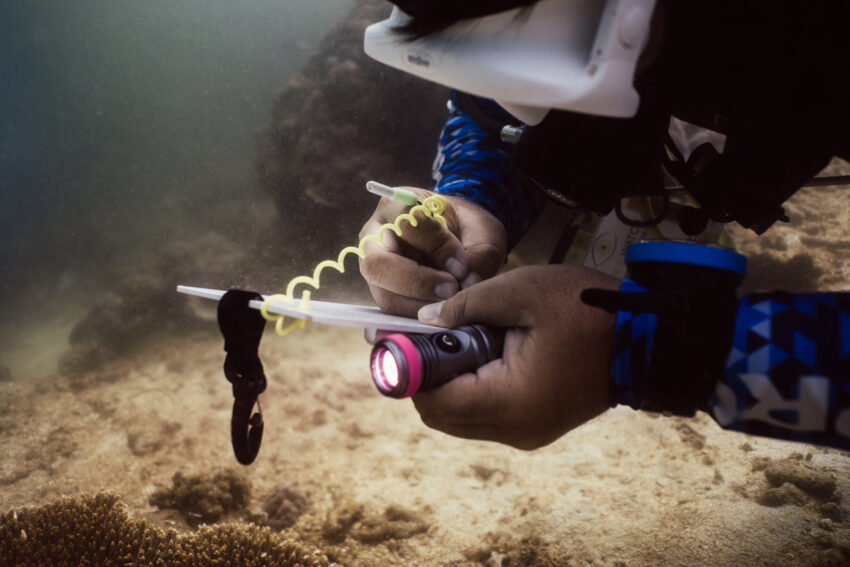
Through programs like PADI Peak Performance Buoyancy, Coral Identification, Fish Identification, and the CoralWatch Specialty, we help guests understand reef ecosystems and how human behavior affects them. We also run Reef Check survey dives, monitor coral health, document spawning events, organize cleanups, and support marine mammal rescue when strandings occur.
This is citizen science, not decoration — every survey our guests help run becomes part of a real, growing record of what Pemuteran Bay’s reefs look like, species by species, year by year. We’re proud of it, and honest about its limits: we’re not marine biologists running a formal research program, and we don’t have government authorization to plant coral. What we have is consistent, credible data.
For us, conservation isn’t one symbolic experience for a photo. It’s long-term reef protection through education, science, and practical field work.
This isn’t a permanent no
If the data, conditions, and location one day point toward planting being right for this reef, we’ll do it — carefully, for the right reasons. Right now, we’re in the phase where we listen and learn before we act. That’s trusting the ocean enough to understand her before trying to change her.
Can I learn about and participate in coral restoration at Abyss?
Yes — just maybe not the way you’re picturing. Most people picture planting fragments onto a frame. That’s one method some operators use. It’s not what we teach right now.
What we teach first is the baseline: identifying coral species, reading reef health, running the surveys CoralWatch and Reef Check are built on, and understanding what a reef actually needs before anyone decides to intervene in it. Planting coral without knowing the species, or without knowing the health of the site you’re planting into, doesn’t make sense to us — so that’s where we start.
Once you have that foundation, it’s the same foundation any real restoration decision would need anyway.
Guests who want to go deeper can join us for a one-week marine conservation program, or longer month-long stays focused on reef monitoring, marine ecology, and responsible diving — built for divers, students, and travelers who want something more meaningful than a standard dive holiday in Northwest Bali.
Get in touch if you want help figuring out what fits the time you have.

