Can Diving Protect Coral Reefs?
The Role of Dive Tourism in Indonesia
When discussions about ocean governance, reef degradation, and sustainable tourism take place in Indonesia, dive operators should be paying attention.
This year, those conversations came into focus during the Bali Ocean Days conference, followed by a regional Green Fins workshop organized by The Reef-World Foundation. We chose to send two representatives to attend both events — not out of obligation, but because the outcomes directly affect the marine environment in which we operate every day.
The central question that emerged was simple and confronting:
Can diving in Indonesia move from being part of the problem to part of the sustainable solution?
The Growing Debate Around Dive Tourism Impact
At Bali Ocean Days, policymakers, marine scientists, NGOs and tourism stakeholders came together to assess the state of Indonesia’s oceans.
The tone varied throughout the sessions — at times hopeful, at times deeply sobering.
In one discussion in particular, tourism — and especially dive tourism — was described as a significant driver of reef damage. The argument was not entirely unfounded. In regions where standards are poorly enforced and growth has been unmanaged, marine ecosystems have suffered.
Anchoring practices, diver behavior, inadequate waste management, and insufficient environmental training all contribute to cumulative impact.
It would be easy for operators to reject such criticism outright. However, lasting credibility requires acknowledging where improvement is necessary. The health of coral reef ecosystems is too important for defensiveness.
Is Dive Tourism Damaging Coral Reefs?
The reality is not so simple,
Diving itself is not inherently harmful — but unmanaged diving can be. Without clear standards, training, and accountability, even well-intentioned operators can contribute to reef degradation over time. The conversation is shifting away from whether diving should exist, and toward how diving can actively support coral reef conservation in Indonesia.
From Policy to Practice: The Role of Green Fins
The conversation did not stay at criticism for long. It shifted toward practical ways the industry can improve and grow.
The Green Fins Code of Conduct provides a clear set of measurable environmental standards for dive centers to operate within. It shifts the focus away from whether diving is harmful, and toward what operators can do to reduce their negative impact and increase their positive impact.
Initiatives such as Green Fins, along with programs like the PADI Eco Dive Center framework, help clarify what responsible operations look like, both in terms of environmental performance and accountability.
At its core, the message is simple: meaningful change comes through consistent standards and collaboration across the industry.
How Diving Can Protect Coral Reefs
While Bali Ocean Days focused on policy, the Green Fins workshop shifted toward implementation.
A key theme was the role of dive professionals in citizen science and reef monitoring.
Dive teams are in the water daily. They observe gradual changes that are often missed by occasional surveys. When these observations are structured and recorded, they become valuable data.
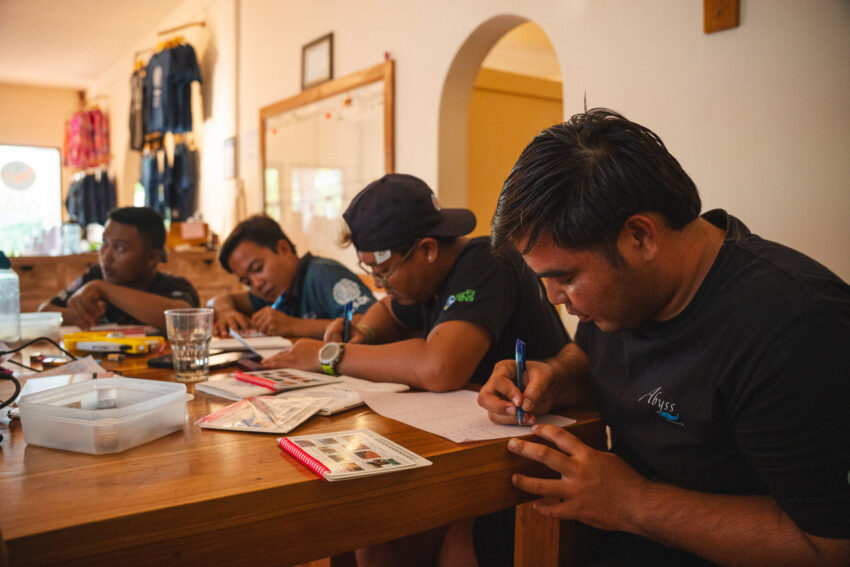
Frameworks such as Reef Check provide standardized methods for collecting comparable data across regions. Our team has now completed the Reef Check Eco Diver course, strengthening our ability to contribute to long-term reef monitoring and management.
Equally inspiring was the work of the Marine Megafauna Foundation. Their approach shows that meaningful conservation participation does not require large infrastructure — only awareness, training, and commitment.
Operating in the Coral Triangle
We operate within the Coral Triangle — the most biodiverse marine region on the planet.
This creates extraordinary opportunities for divers, but also a heightened responsibility for those working here.
The discussions made it clear that environmental standards and regulatory frameworks in Indonesia will continue to evolve. Yet only a small number of dive operators were present in these conversations.
If operators are absent, decisions will still be made — but without practical insight from those working directly within the ecosystem.
Why Dive Centers Must Be Part of the Conversation
As a dive center, the ocean is our workplace.
Protecting it is not an additional project — it is part of how we operate every day.
Sustainable dive tourism cannot remain a marketing phrase. It must be reflected in:
- measurable standards
- daily operational practices
- long-term contributions to conservation
What matters is not the label, but whether dive operations actively contribute to reef protection.
Our Approach to Sustainable Diving in Indonesia
For us, participation is not optional.
We choose to engage in these discussions, to listen to criticism, and to implement practical improvements in our operations.
Through ongoing conservation initiatives, staff training, and alignment with frameworks such as Green Fins, we aim to contribute to a model of diving that supports — rather than degrades — the marine environment.
The future of dive tourism in Indonesia is not predetermined.
It will depend on whether the industry acknowledges its impact and actively evolves.
We believe diving can be part of the solution.
And we choose to act accordingly.

